
 by | Last Updated:
Is VR Dying? What the 79% Shipment Collapse Actually Means for Your Quest
Headset shipments fell off a cliff last quarter while AI glasses grew 776%. Meta’s CTO says the company has not given up on VR. Both things are true, and your game library depends on which one you believe.
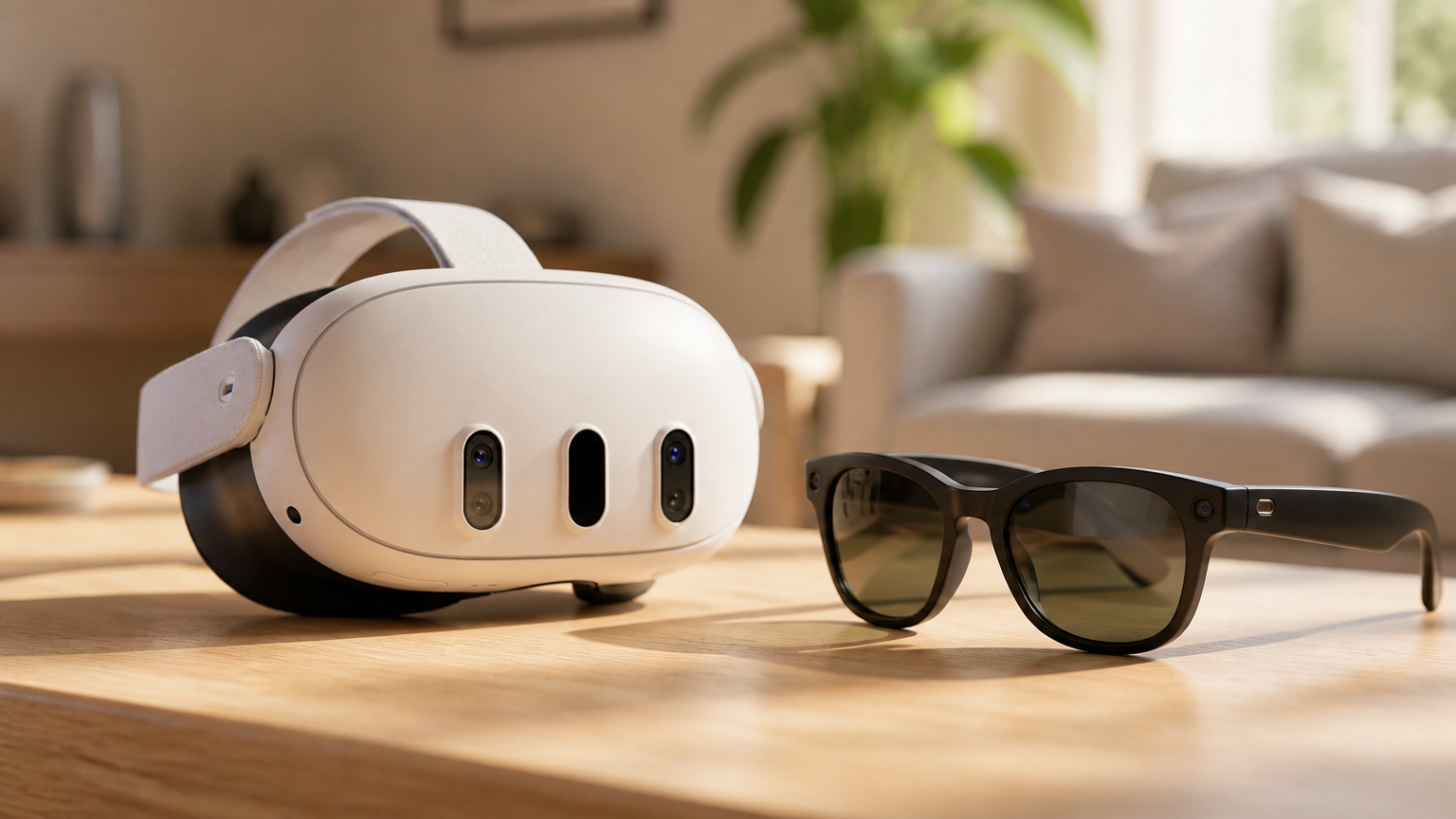
The number has been making the rounds since Tuesday: VR headset shipments fell 79% year over year in Q2 2026, according to research firm Smart Analytics Global. In the same three months, AI smart glasses shipments grew 776%. Every outlet that ran the story framed it the same way, and the comment sections followed: VR is dead, glasses won, sell your Quest while it’s worth something.
If you own a Quest, that is the wrong question to ask. The right one is narrower and more personal: does a shipment collapse change anything about the headset on your shelf, the games you bought, and the support you can expect? After reading the underlying SAG report, cross-checking it against two other market trackers, and weighing everything Meta has said and done this year, our answer is: your library is safe, the platform is entering maintenance mode rather than hospice, and the single most important date on the calendar is Meta Connect, September 23 to 24.
First, what the 79% number actually says
The figure comes from SAG’s Wearable 360 Service, published August 18. The firm tracks “eye wearables” in three buckets: AI smart glasses (think Ray-Ban Meta), AR glasses with displays (XREAL, VITURE, RayNeo), and VR headsets (which in SAG’s definition includes Apple Vision Pro). Here is the whole quarter in one picture:
The mix shift is the more telling statistic. One year ago, AI smart glasses were a niche inside the eye-wearable market. Now they are the market:
You can back-calculate what -79% means in actual headsets. SAG says Q2 2026 totaled just over 4 million units, up 89%, which puts Q2 2025 around 2.1 million. AI glasses were 19% of that, roughly 400,000 units; growing 776% gets them to about 3.5 million, which matches SAG’s 85%+ share this year. The remainder, AR plus VR, shrank from roughly 1.7 million units to about 600,000. Split that using each category’s growth rate and VR goes from about 1.5 million headsets shipped in Q2 2025 to roughly 300,000 in Q2 2026. (That split is our estimate derived from SAG’s published percentages; SAG does not release unit counts.)
Even within the collapse, one company dominates what’s left: SAG puts Meta at about 58% of VR headset shipments, followed by Sony at 20% and Pico at 12%. Meta is simultaneously the biggest winner in glasses (76% share) and the biggest player in a shrinking VR market. That fact matters for what comes next.
Before you panic: one firm, one quarter, one caveat
The 79% is real, but it is one tracker’s reading of one quarter, and it does not line up neatly with what other firms measured three months earlier. Here is how the trackers compare:
| Tracker | Quarter | VR reading | Glasses reading |
|---|---|---|---|
| SAG | Q2 2026 | -79% YoY | AI glasses +776%; eye wearables +89% to 4M+ units |
| Counterpoint | Q1 2026 | -17% YoY, -39% QoQ | Intelligent eyewear +83% YoY |
| IDC | Q1 2026 | n/a in public release | Display-less smart glasses 2.25M units, +167% YoY |
The gap between Counterpoint’s -17% in Q1 and SAG’s -79% in Q2 is the detail worth chewing on. A few plausible causes, which are not mutually exclusive:
- Price-hike pull-forward. Meta raised Quest prices in April 2026, which pushed buyers into Q1 ahead of the increase and left Q2 hollow.
- A frozen upgrade cycle. The last new Meta hardware was the Quest 3S. With Valve’s Steam Frame imminent and Meta’s ultralight “Phoenix” headset expected in 2027, the community is openly waiting rather than buying. A thread titled “Who else is seriously looking forward to Meta Phoenix?” on r/OculusQuest drew over 100 comments this week.
- Methodology. SAG counts Vision Pro-class devices as VR; a bad quarter for $3,500 headsets moves a small-volume category hard.
None of these describes a product people stopped enjoying. They describe a market between hardware generations, measured by firms with different rulers. SAG itself forecasts VR rebounding in 2027 “supported by an expected refresh of Meta’s Quest portfolio.”
Bosworth’s “No”: what it committed him to
On July 9, during an Instagram AMA, Meta CTO Andrew Bosworth was asked directly: “Did you guys give up on VR?”
“No. We’ve talked about this a lot this year, kind of an odd comment. We’ve just updated the user interface profoundly for the first time in years. We’ve talked openly about the fact that we’re building multiple next-generation headsets. We did get ourselves into more sustainable shape, that’s true. But no. We continue to invest quite a bit there. So, stay tuned for Connect and we’ll have more to share then.”Andrew Bosworth, Instagram AMA, July 9 2026, via UploadVR
Words from executives are cheap, so here is that “No” audited against what Meta has actually said and done in 2026:
| The claim | Evidence behind it | What it does not promise |
|---|---|---|
| “Multiple next-generation headsets” in development | CFO Susan Li confirmed plural headsets on the Q4 2025 earnings call; Bosworth said in January there are “two devices on the roadmap”; December internal memos described a gaming-focused headset and the ultralight tethered-puck Phoenix; Phoenix firmware traces found in June, setup video leaked July 30 | Any timeline. UploadVR’s understanding is Quest 4 lands late 2027 at the earliest. Nothing was announced for 2026. |
| Your games will survive | March 2026: after user backlash, Meta reversed course and kept Horizon Worlds running in VR; Bosworth said existing games stay available “for the foreseeable future”; Horizon+ passed 1 million active subscribers with 100+ games | “Foreseeable future” is not “forever.” No first-party sequel pipeline: the Batman: Arkham Shadow sequel was cancelled and three acquired studios closed in January. |
| “We continue to invest quite a bit” | Meta dev blog, Feb 2026: VR-first platform split, continued third-party partnerships; 86% of headset time is already spent in third-party apps | The money is shrinking. On the April call, Li said VR investment would “decrease significantly” as spending shifts to wearables. Reality Labs lost $4.62B in Q2 on $431M revenue, roughly $88B cumulative since 2020. |
The honest synthesis of 2026 looks like this:
- January~10% Reality Labs layoffs; three studios closed; Horizon Worlds put in maintenance mode. CFO Li tells investors Meta still has “optimism in the future of VR.”
- FebruaryBosworth calls the layoffs a “real loss.” Meta publishes its developer blog separating the Quest VR platform from Worlds, and tells developers: “This journey is 1% finished.”
- MarchMeta backtracks and keeps Horizon Worlds in VR; promises games remain available “for the foreseeable future.”
- AprilLi confirms VR investment will “decrease significantly,” with spending shifting to wearables. Quest prices go up.
- July 9Bosworth’s AMA: “No. We’ve talked about this a lot this year.”
- July 30Q2 earnings: Reality Labs loses $4.62B. Zuckerberg’s prepared remarks focus on AI and smart glasses; Quest comes up in passing. Same week, a Phoenix setup video leaks.
- August 18SAG publishes the -79% figure.
- September 23-24Meta Connect. Bosworth’s own words: “we’ll have more to share then.”
VR.org’s Q2 earnings analysis put it best: “Meta has not abandoned VR. It has stopped arguing for it.” That is the difference between death and maintenance. A platform in maintenance keeps working, keeps selling, keeps shipping updates; it just stops being where the next dollar goes.
So what does this mean for your Quest?
The practical verdict for owners
- Your game library is safe for now. Meta has publicly committed to keeping existing titles available “for the foreseeable future,” and reversed one retreat (Horizon Worlds VR) under community pressure this year.
- New first-party games will be scarce. Three studios closed, one major sequel cancelled. The gap is being filled by third-party developers (86% of time in headsets is already spent in third-party apps) and a thriving mod scene: this same week, a fan-built native port of GTA: San Andreas for Quest 3 hit the front page of r/OculusQuest with 600+ upvotes.
- Expect slowness before silence. Platform decline shows up first in patch cadence, delayed features, and developer relations, years before any store closes. That is the early-warning metric to watch, not shipment data.
- No new Meta VR headset this year. Phoenix is widely expected to be previewed at Connect and launch in the first half of 2027; a Quest 4 is late 2027 at earliest per UploadVR. If you were waiting for hardware, you’ll be waiting a while, which makes current Quest 3 discounts the rational buy.
- September 23 is the tell. Bosworth has pointed at Connect twice now. An actual headset reveal or a strong software slate vindicates the “No.” A glasses-only keynote would be the clearest signal yet that VR is being managed, not grown.
One structural fact should comfort owners more than any executive quote: Meta holds 58% of VR shipments, Sony 20%, Pico 12%. There is no backup vendor, which means there is also no incentive for Meta to torch the category. Every Quest already sold is an audience Meta’s glasses business, its Horizon platform, and its developers all want to keep. Abandoning VR would strand the 1 million-plus Horizon+ subscribers and the third-party ecosystem that now accounts for nearly all headset usage. Maintenance mode is, for Meta, the profitable choice.
Is VR dying? The shipment number says the market between hardware generations is small, and that is true. But “dying” implies a trajectory toward off, and everything Meta did in 2026 points somewhere else: toward a smaller, slower, still-running platform with a new headset rumored for 2027. Keep your games, enjoy the sales, watch the patch notes more than the press releases, and block off September 23.
- Smart Analytics Global, “SAG: Global Eye Wearable Shipments Grew 89% YoY to Over 4M Units in Q2 2026” (Aug 18, 2026)
- Android Headlines, “AI Smart Glasses Shipments Are Up 776% While VR Headsets Just Collapsed” (Aug 19, 2026)
- UploadVR, “Meta Reaffirms Multiple Next-Generation Headsets, Hints At Announcement Month” (Jul 9, 2026)
- Meta Developer Blog, “Our Renewed Focus in 2026” (Feb 19, 2026)
- VR.org, “Reality Labs Lost $4.62 Billion in Q2” (Jul 31, 2026)
- Counterpoint Research, Global XR Market Share Quarterly (updated Jun 2026)
- IDC, Augmented and Virtual Reality Headsets Market Insights (Jul 2026)
- Road to VR, “Meta Connect Event Set for September 23-24” (May 12, 2026)